

Sometimes the best solutions emerge exactly where the need is greatest. This was also the case at VIRO "Werk 2" in Hilter a.T.W., a roughly 600-square-metre assembly hall. A new mobile storage bin trolley was needed to provide organised, space-saving and flexible storage for standard components. Rather than opting for a standard solution, the decision was made to develop a more cost-effective version in-house, tailored precisely to the company’s requirements.
Trainees Marius Konersmann and Patrick Johnston took on this task together with André Weßeler, Group Leader Project Management at VIRO, who acted as the internal customer. From the initial idea through to the finished product, they managed the project independently and gained valuable experience in stakeholder management, requirements analysis, design (Design-to-Cost), project management, procurement and assembly. “The two of them delivered a complete turnkey project and, in doing so, gained experience in a wide range of roles and tasks,” explains André Weßeler.
The first step was to analyse the requirements: How could as many storage bins as possible be accommodated in a limited space without compromising on stability, ergonomics or cost-effectiveness? Together with the stakeholders, the requirements were gathered, refined and prioritised. This enabled the trainees to learn early on in the project how important it is to understand the needs of different stakeholders and translate them into technical requirements.
Through brainstorming sessions, morphological analyses, weighted evaluations and comparisons of different concepts, several potential solutions were developed. Following an assessment of the concepts, the project team jointly decided on a design using ITEM profiles and specially developed sheet-metal components. In addition to technical suitability, Design-to-Cost played a particularly important role: the solution not only had to work, but also had to be designed with cost-effectiveness in mind from the outset.
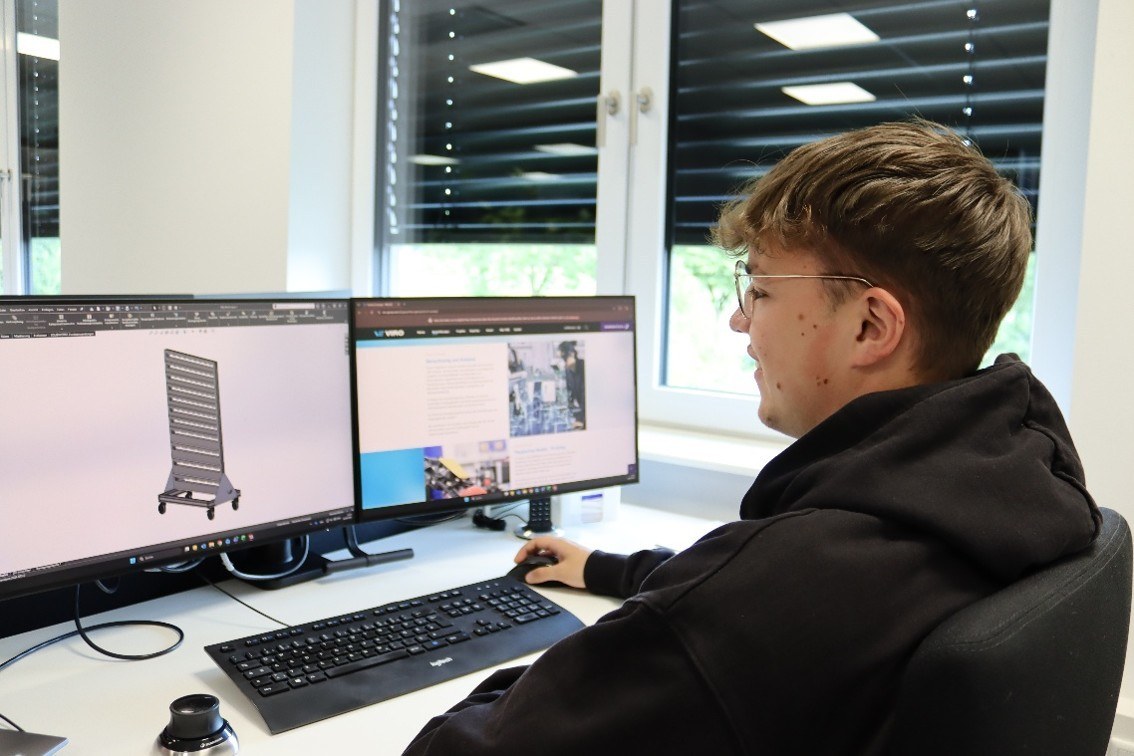
Following the concept decision, the storage bin trolley was developed entirely in CAD. All individual components were designed, manufacturing drawings were created and the design was continuously optimised in close consultation with everyone involved. At the same time, the trainees took on additional project responsibilities along the procurement chain. These included cost calculations, obtaining and comparing quotations, and coordinating with suppliers. Goods receipt, including inspection, as well as subsequent assembly at "Werk 2" were also part of the project. In this way, they experienced the entire product development process – from the initial need right through to the finished product ready for use.
The coordination with suppliers in particular demonstrated how important clear communication and effective stakeholder management are in a project. Technical requirements, delivery schedules and commercial considerations all had to be brought into alignment.
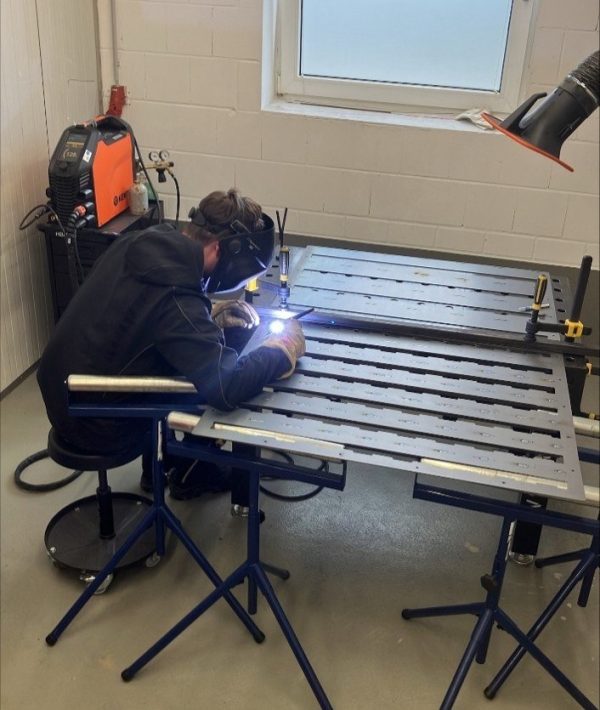
At its assembly hall, VIRO reliably implements individual customer requirements and customised solutions. Like many other customer projects, the new storage bin trolley was also assembled at Plant 2. And the result speaks for itself: the trolley meets all requirements in terms of stability, functionality and storage capacity. At the same time, external costs were reduced by around €600 compared with comparable solutions, providing clear added value for the company. “In addition to the commercial success, the project above all demonstrates the potential of our future talent. Taking ownership, applying technical expertise and working closely with different stakeholders resulted in a practical solution that can now be used at Plant 2,” concludes Weßeler.
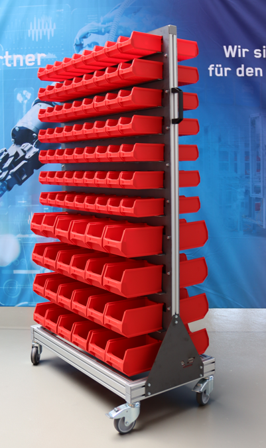
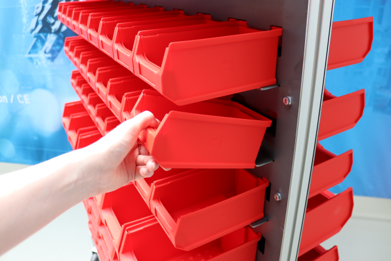
Of course, not every step of the project went perfectly. Minor errors in material ordering and lessons learned from scheduling highlighted the importance of thorough preparation and forward-looking project coordination. These experiences are precisely what make the project so valuable: challenges became learning opportunities, and theory was transformed into practical experience. A particular focus was placed on the Design-to-Cost approach. Cost-effectiveness was not considered only during procurement, but was already taken into account during development and design. The trainees therefore had to repeatedly weigh up different options: Which solution would reliably meet the requirements while requiring as little effort as possible and remaining within reasonable cost parameters? This is what makes the trainee project particularly valuable: the trainees were able to take responsibility, make their own decisions and learn from their mistakes at the same time. This brought elements of their training directly to life in practice – from the initial requirements through stakeholder management and Design-to-Cost to procurement and hands-on assembly.
The project impressively demonstrates what is possible when young talent is given responsibility. In the end, it produced not only a cost-effective storage bin trolley, but something equally valuable: lasting experience for the skilled professionals of tomorrow.